OTTOMAN RULING ELITE IN THE SANJAK OF SEMENDIRE DURING THE EIGHTEENTH CENTURY
DOI:
https://doi.org/10.2298/GEI2003661PKeywords:
Ottoman Empire, The Sanjak of Semendire, 18th Century, transitional period, elites, aʻyan, mütesellim, voyvoda, muhafız, kadiAbstract
The Transitional period in the Ottoman Empire (17th-18th century) brought about changes in the organization of government that were felt deeply at the imperial periphery. The process of decentralization in the Ottoman Balkans was most prominent during the 18th century. Traditional roles of political and social agents in towns became ever more unstable and the shifts of ruling elites were ever more pronounced. The ruling, Muslim elite had gradually joined together by forming political alliances in order to gain influence and money. Political struggles became constant. Belonging to the elite through acquiring the status of asker – either by enlisting into janissaries or by getting a timar and the status of spahi – did not guarantee a political influence or wealth. The new elite got their positions thanks to the political connections with either local or central government. The financial power was a factor that mostly determined a person’s status in the 18th century, and it did not depend on the legitimacy of economic undertakings. The capital was accumulated through trade, tax farming and tax collecting. The close relations with the representatives of government secured path towards an elite status. The rise of the new local governing elite and the ways of its social and political promotion were not identical processes even in the neighboring provinces. The role of mütesellim, voyvoda or kapudan, depended on the character of the Ottoman administration in the province (sanjak), which is why case studies contribute to the overall knowledge about the organization of Ottoman local authorities.
Downloads
References
Osmanski arhiv Predsedništva vlade. Istanbul (Başbakanlık Osmanlı Arşivi, BOA):
Bab-ı Asafi, Divan-i Hümayun Sicilleri, Rumeli Ahkam Defterleri (BOA. A. DVNS. AHKR. d. No/Hüküm No.): 3/820, 3/890, 20/791, 25/196, 25/1193, 26/32, 38/639, 39/323, 40/343, 40/693, 41/66, 41/230, 41/355, 42/416, 42/438, 42/668, 45/325, 50/278, 50/328, 50/664, 50/736, 53/385.
Bab-ı Defteri, Başmuhasebe, Belgrad Hazinesi (BOA. D. BŞM. BLH. Dosya/Gömlek Sıra No.): 6/66; 6/82.
Muzej Srpske Pravoslavne Crkve Beograd. Turska dokumenta (МСПЦ. ТД.) br. 8378.
Adanir, Fikret. 2002. “Woywoda”. In The Encyclopaedia of Islam: New Edition, eds. P. Bearman & T. Bianquis & C. Bosworth & E. Donzel & W. van Heinrichs. Vol. XI: W–Z. Leiden: Brill.
Aksan, Virginia H. 1999. “Ottoman Military Recruitment Strategies in the Late Eighteenth Century”. In Arming the State: Military Conscription in the Middle East and Central Asia 1775–1925, ed. Erik Zürcher, 21–39. London: I. B. Taurus & Palgrave Macmillan.
‘Ali Abou-el-Haj, Rifa’at. 2005. Formation of The Modern State. The Ottoman Empire, Sixteenth to Eighteenth Centuries. New York: Syracuse University Press.
Amedoski, Dragana. 2019. „Žena u ulozi naslednice u osmansko doba: primer žene muslimanke na Centralnom Balkanu (17‒18. vek)“. Glasnik Etnografskog instituta SANU 67 (2): 325–338.
Anastasopoulos, Antonis, Stefanos Poulios & Yannis Spyropoulos. 2019. “The Spread of Çiftliks (Large Estates) in the Eighteenth-Century Ottoman Balkans: The Case of the District of Veroia”. In History, Culture and Research, eds. Dumitru Cătălin Rogojanu & Gherghina Boda. Vol. III, 90–109. Târgovişte: Cetatea de Scaun.
Bojanić Lukač, Dušanka & Suzana Đorđević. 1984. „Razvoj lokalne gradske uprave na Balkanu od XV do XIX veka“. U Gradska kultura na Balkanu (XV‒XIX vek), prir. Radovan Samardžić, 59‒84. Beograd: Balkanološki institut SANU.
Çakır, Baki. 2003. Osmanlı Mukatаa Sistemi (XVI-XVIII. Yüzyıl). İstanbul: Kitabevi.
Dankoff, Robert. 1991. The Intimate Life of an Ottoman Statesman: Melek Ahmed Pasha (1588–1662). New York: State University of New York Press.
Đurđev, Branislav. 1949. „O knezovima pod turskom upravom“. Istorijski časopis 1: 132–166.
Faroqhi, Suraiya. 2009. Sultanovi podanici. Kultura i svakodnevica u Osmanskom carstvu. Zagreb: Golden marketing & Tehnička knjiga.
Fotić, Aleksandar. 2017. “Tracing the Origin of a New Meaning of the Term Re’āyā in the Eighteenth Century Ottoman Balkans”. Balcanica. Annuaire de l ՚Institut des Études Balkaniques XLVIII: 55–66.
Gara, Eleni. 2005. “Moneylanders and Landowners: In Search of Urban Muslim Elites in the Early Modern Balkans”. In Provincial Elites in the Ottoman Empire, ed. Antonis Anastasopoulos, 135–147. Rethymno: Crete University Press.
Gradeva, Rossitsa. 1999. “The Activities of a Kadi Court in Eighteenth Century Rumeli: The Case of Hacioğlu Pazarcık”. Oriente Moderno. Nuova Serie, Anno 18. 79 (1): 177–190.
Gradeva, Rossitsa. 2006. “Osman Pazvantoğlu of Vidin: Between Old and New”. In The Ottoman Balkans, 1750–1830, ed. Frederick Anscombe, 115–173. Princeton: Markus Wiener.
Hadžijahić, Muhamed. 1952–1953. „Hamzevije u svjetlu poslanice užičkog šejha“. Prilozi za orijentalnu filologiju 3–4: 215–229.
Hathaway, Jane. 1997. The Politics of Households in Ottoman Egypt: The Rise of Qazdağlis. Cambridge: University Press.
Ivanova, Svetlana. 2005. “Varoş: The Elites of the Reaya in the Towns of Rumeli, Sevententh-Eighteenth Centuries”. In Provincial Elites in the Ottoman Empire, ed. Antonis Anastasopoulos, 227–240. Rethymno: Crete University Press.
Koçi Bey. 1972. Koçi Bey Risalesi. Hzr. Zuhuri Danışman. İstanbul: Mili Eğitim Bakanlığı.
Korić, Elma. 2012. „Pratnja bosanskog sandžakbega Ferhad-bega Sokolovića“. Prilozi za orijentalnu filologiju 61: 351–368.
Krešić, Ognjen & Miroslav Pavlović. 2020. „Institucija kolektivnog jemstva (kefalet) u osmanskoj pravnoj teoriji i praksi tokom tranzicionog doba“. Zbornik Matice srpske za društvene nauke 174: 167–183.
Kütükoğlu, Mübahat S. 1994. “Defterdar”. In Türkiye Diyanet Vakfı İslâm Ansiklopedisi 9, eds. Tayyar Altıkulaç İsmail Erünsal, Hayreddin Karaman, Bekir Topaloğlu & M. Saim Yeprem, 94–96. Ankara: Türkiye Diyanet Vakfı.
Laiou, Sophia. 2014. “Patronage Networks in The Aegean Sea: and of the 18th – beginning of the 19th Century”. In New Trends in Ottoman Studies, ed. Marinos Sariyannis, 413–423. Rethimno: University of Crete.
Mušić, Omer. 1951. „Poslanica šejha Muhameda Užičanina beogradskom valiji Muhamed-paši“. Prilozi za orijentalnu filologiju 2: 185–194.
Nenadović, Prota Mateja. 2005. Memoari. Beograd: Narodna knjiga & Politika.
Oğuzoğlu, Yusuf. 1994. “Dizdar”. In Türkiye Diyanet Vakfı İslâm Ansiklopedisi 9, eds. Tayyar Altıkulaç İsmail Erünsal, Hayreddin Karaman, Bekir Topaloğlu & M. Saim Yeprem, 480–481. Ankara: Türkiye Diyanet Vakfı.
Ortaylı, İlber. 2010. Türkiye Teşkilat ve İdare Tarihi. Ankara: Cedid Neşriyat.
Özcan, Abdülkadir. 2002. “Köprülüzade Numan Paşa”. In Türkiye Diyanet Vakfı İslâm Ansiklopedisi 26, eds. Tayyar Altıkulaç İsmail Erünsal, Hayreddin Karaman, Bekir Topaloğlu & M. Saim Yeprem, 265–267. Ankara: Türkiye Diyanet Vakfı.
Özcan, Abdülkadir. 2013. “Zabit”. In Türkiye Diyanet Vakfı İslâm Ansiklopedisi 44, eds. Tayyar Altıkulaç İsmail Erünsal, Hayreddin Karaman, Bekir Topaloğlu & M. Saim Yeprem, 60–61. Ankara: Türkiye Diyanet Vakfı.
Pakalın, Mehmet Zeki. 1993. Osmanlı Tarih Deyimleri ve Terimleri Sözlüğü, C. III, İstanbul: Mili Eğitim Bakanlığı Yayınları.
Pavlović, Miroslav. 2017. Smederevski sandžak 1739–1788. Vojno-administrativno uređenje. Novi Sad: Matica srpska.
Pavlović, Miroslav & Ognjen Krešić. 2019. „Muslimansko stanovništvo Beograda u 18. veku“. Antropologija 19 (3): 15–38.
Piterberg, Gabriel. 2003. An Ottoman Tragedy. History and Historiography at Play. Berkeley & Los Angeles & London: California University Press.
Sadat, Deena R. Sept. 1972. “Rumeli Ayanlari: The Eighteenth Century”. The Journal of Modern History 44 (3): 346–363.
Sućeska, Avdo. 1959. „Mjesto muteselima u lokalnoj upravi do tanzimata (Prilog izučavanju lokalne uprave u našim zemljama za vrijeme Turaka)“. Godišnjak Pravnog fakulteta u Sarajevu 7: 295–315.
Sućeska, Avdo. 1960–1961. „Promjene u sistemu izvanrednog oporezivanja u Turskoj u XVII vijeku i pojava nameta tekalif-i şakka“. Prilozi za orijentalnu filologiju X–XI: 75–112.
Sućeska, Avdo. 1962. „Vilajetski ajani (prilog izučavanju organizacije turske vlasti u našim zemljama)“. Godišnjak Društva istoričara Bosne i Hercegovine XIII: 167–198.
Sućeska, Avdo. 1965. Ajani: Prilog izučavanju lokalne vlasti u našim zemljama za vrijeme Turaka. Sarajevo: Naučno društvo SR Bosne i Hercegovine.
Šabanović, Hazim. 1956. Turski izvori o Srpskoj revoluciji 1804. Knjiga 1, Spisi Carske kancelarije 1789–1804. Beograd: Istorijsko društvo N. R. Srbije.
Šabanović, Hazim. 1968–1969. „Bosanski divan. Organizacija i uređenje centralne zemaljske uprave u Bosni pod turskom vlašću do kraja XVII stoljeća“. Prilozi za orijentalnu filologiju XVIII–XIX: 9–45.
Tezcan, Baki. 2020. The Second Ottoman Empire. Political and Social Transformation in the Early Modern World. Cambridge: Cambridge University Press.
Todorov, Nikolay. 1972. Balkanskiyat grad XV-XIX vek. Socio–ikonomičesko i demografsko razvitie. Sofia: Nauka i izkustvo.
Tričković, Radmila. 1970. „Čitlučenje u Beogradskom pašaluku u XVIII veku“. Zbornik Filozofskog fakulteta XI (1): 525–549.
Tričković, Radmila. 1971а. „Spisak muhafiza Beograda od 1690. do 1789. godine“. Istorijski časopis XVIII: 297–328.
Tričković, Radmila. 1971б. „Leskovac i okolina u XVIII veku (1683–1804)“. Leskovački zbornik XI: 5–23.
Tričković, Radmila. 1979. „Ćuprija i Srednje Pomoravlje do Prvog srpskog ustanka“. U Boj na Ivankovcu 1805. godine, prir. Vaso Čubrilović, 85–169. Ćuprija & Beograd: SIZ kulture Skupštine opštine Ćuprija & SANU.
Üzünçarşılı, İsmail Hakkı. 1988. Osmanlı Devleti Teşkilâtında Kapukulu Ocakları. Cilt 1–2. Ankara: Türk Tarih Kurumu.
Zens, Robert. 2012. “In the Name of the Sultan: Haci Mustafa Pasha of Belgrade and the Ottoman Provincial Rule in the Late 18th Century”. International Journal of Middle East Studies 44 (1): 129–146.
Zilfi, Madeline C. 2008. Dindarlık Siyaseti Osmanlı Uleması: Klasik Dönem Sonrası 1600–1800. Ankara: Birleşik Yayınevi.
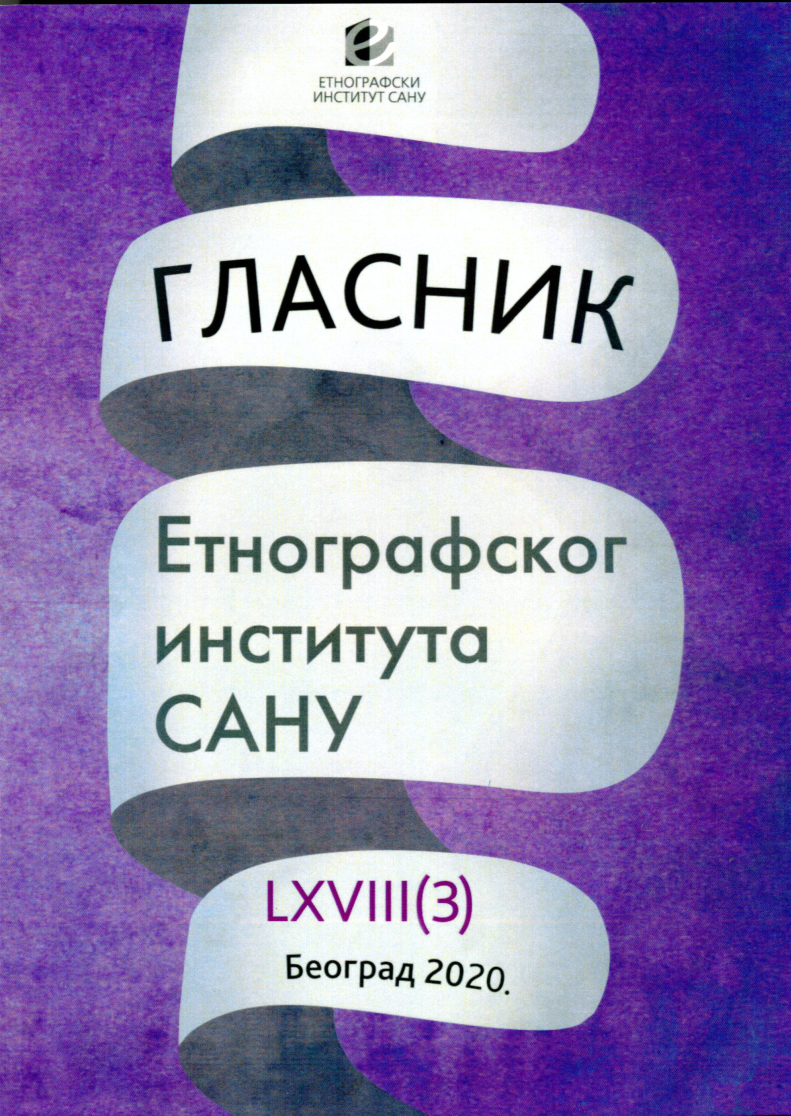
Downloads
Published
Issue
Section
License
Copyright (c) 2020 Bulletin of the Institute of Ethnography SASA

This work is licensed under a Creative Commons Attribution-ShareAlike 4.0 International License.
